For centuries, people living in the northern forests of Canada, Scandinavia, Russia, and parts of Asia have prepared Chaga mushroom tea by slowly simmering pieces of wild Chaga collected from living birch trees. Long before capsules, extracts, and modern supplements became widely available, brewing Chaga as a warm, earthy tea was the traditional way to enjoy this remarkable forest mushroom.
Today, Chaga tea continues to grow in popularity among people seeking a simple, natural beverage with a rich history. Whether prepared from wild Chaga chunks, tea cut, or powder, each cup reflects a tradition rooted in nature and shaped by time.
If you’re new to Chaga or looking to learn more about brewing authentic wild Canadian Chaga, this guide covers everything you need to know—from what Chaga tea is and how it’s made to the different forms available and how to prepare the perfect cup.
Harvesting with ♡ Since 2009
What Is Chaga Mushroom Tea?
Chaga mushroom tea is a hot beverage prepared by extracting the natural compounds found in wild Chaga (Inonotus obliquus) using hot water. Unlike traditional teas made from leaves, Chaga tea is brewed from the hard, black conk that develops naturally on living birch trees over many years.
Because Chaga is extremely dense and woody, it is not simply steeped like ordinary tea leaves. Instead, it is traditionally simmered gently, allowing the water to gradually extract its naturally occurring compounds while producing the tea’s characteristic deep amber colour and smooth, earthy flavour.
Many people appreciate Chaga tea not only for its rich taste, but also for the quiet ritual of preparing it. Brewing Chaga encourages a slower pace, making each cup part of an experience that has been enjoyed for generations.
A Tradition Rooted in Northern Forests
Long before modern wellness products became popular, Chaga was harvested by hand from living birch trees growing throughout the cold forests of the Northern Hemisphere.
After harvesting, the Chaga was carefully dried and broken into smaller pieces before being gently simmered over low heat for extended periods. Families often prepared large batches that could be enjoyed throughout the day, particularly during the long winter months.
Today, authentic wild Chaga continues to be harvested from Canada’s boreal forests using responsible harvesting practices before being carefully cleaned, dried, and prepared for brewing.
Although modern preparation methods have become more convenient, the tradition itself has changed very little.
Why Wild Chaga Makes a Unique Tea
One of the characteristics that makes authentic wild Chaga unique is its remarkably slow natural development.
Unlike cultivated mushrooms that can be grown under controlled conditions within weeks, wild Chaga develops over many years on living birch trees in cold northern climates. During this time, the mushroom is continuously shaped by its natural environment, including the forest ecosystem, seasonal climate, and its long association with birch.
This gradual development contributes to the distinctive appearance, dense texture, and rich character that have made wild Chaga one of the world’s most recognizable forest mushrooms.
What Does Chaga Tea Taste Like?
This is one of the most common questions people ask.
Although Inonotus obliquus has occasionally been observed on a small number of other hardwood species, the Chaga traditionally valued for brewing tea is harvested from birch trees.
Without its natural relationship with birch, the mushroom develops differently and is generally not considered equivalent to wild birch Chaga.
For this reason, reputable suppliers specify that their Chaga is harvested from birch trees rather than simply stating that it is “wild.”
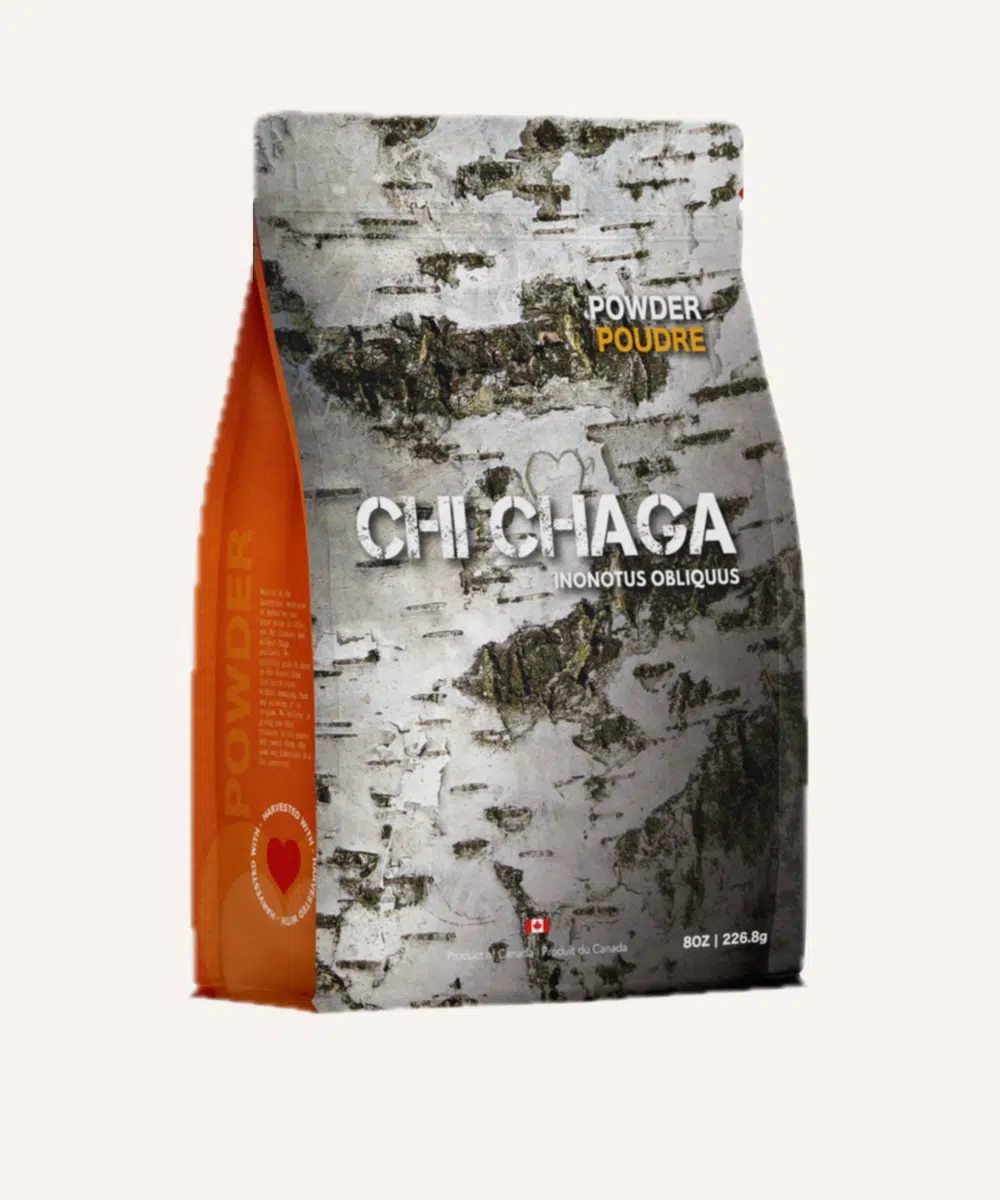
Explore Chi Chaga’s wild Canadian chaga products and discover the format that fits your routine — from traditional chunks and fine powder to convenient tea bags and mushroom blends.