When exploring the world of functional mushrooms, two names appear more often than almost any others: Chaga and Lion’s Mane. Although both have been appreciated for generations and are now enjoyed around the world, they are remarkably different mushrooms with unique appearances, growing environments, flavours, and traditional uses.
Understanding these differences can help you choose the product that best fits your preferences and daily routine.
Harvesting with ♡ Since 2009
What Is Chaga?
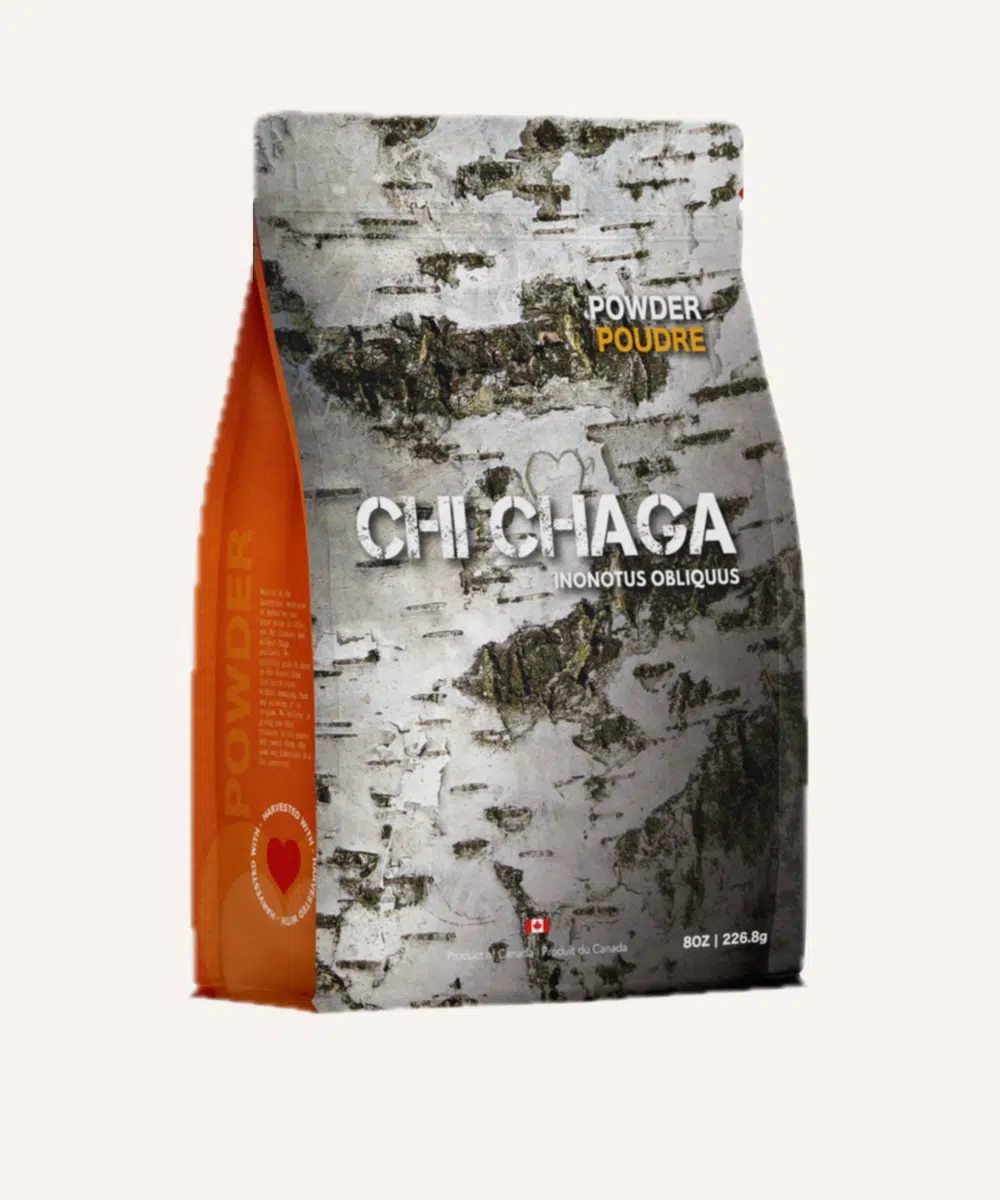
Chaga (Inonotus obliquus) is a wild mushroom that grows primarily on living birch trees throughout northern forests, including Canada, Scandinavia, Northern Europe, and parts of Asia. Unlike the familiar cap-and-stem mushrooms found in grocery stores, Chaga develops as a dark, charcoal-like conk on the outside of the tree while the living fungal mass grows within the birch.
For centuries, Chaga has been prepared as a tea in northern climates where birch forests are abundant. Its deep connection with birch trees makes it one of the most distinctive mushrooms in the world.
What Is Lion’s Mane?
Lion’s Mane (Hericium erinaceus) is instantly recognizable by its long, cascading white spines that resemble a lion’s mane. It grows on hardwood trees, either living or dead, and is found throughout North America, Europe, and Asia.
Unlike Chaga, Lion’s Mane is often enjoyed both as a culinary mushroom and as a dietary supplement. Fresh Lion’s Mane has a mild flavour and a texture often compared to seafood.
Appearance
Chaga
Chaga looks unlike almost any other mushroom. The outside is rough, black, and cracked, resembling burnt charcoal. Inside, it reveals a rich golden-brown to rust-coloured interior.
Lion’s Mane
Lion’s Mane forms a rounded cluster of long white spines that hang downward like icicles. Its appearance is soft, bright, and unmistakable.
Where They Grow
One of the biggest differences between these mushrooms is their habitat.
Chaga
Grows exclusively on birch trees.
Thrives in cold northern climates.
Develops slowly over many years.
Typically harvested from wild forests.
Lion’s Mane
Grows on several species of hardwood trees.
Can be wild harvested or cultivated.
Often grown commercially under carefully controlled conditions.
Wild vs. Cultivated
Wild Canadian Chaga is harvested directly from naturally growing birch forests. Because Chaga develops over many years, responsible harvesting practices are essential to help preserve healthy forest ecosystems.
Lion’s Mane, on the other hand, is widely cultivated, allowing for consistent production while reducing pressure on wild populations.
Flavour
These mushrooms offer completely different flavour experiences.
Prepared as a tea, Chaga produces a dark infusion with a comforting, forest-inspired flavour.
Lion’s Mane: Fresh Lion’s Mane is delicate with a mild flavour. Many people compare its texture to crab or lobster, making it a popular culinary ingredient.
When consumed as a capsule or powder, the flavour becomes much less noticeable.
Traditional Uses
For generations, Chaga has been brewed into tea throughout northern regions where birch forests thrive. It has become closely associated with traditional wellness practices centred around daily herbal beverages.
Lion’s Mane has also been valued in traditional practices and has long been appreciated both as a food and as a mushroom used in traditional wellness systems.
Today, both mushrooms are commonly incorporated into modern daily routines in teas, capsules, powders, and extracts.
Lion’s Mane is frequently added to smoothies, coffee alternatives, soups, and recipes.
Harvesting methods differ significantly.
Wild Chaga requires knowledgeable harvesting from living birch trees while leaving enough material for the forest ecosystem to remain healthy.
Lion’s Mane cultivation allows year-round production under controlled growing conditions.
Which One Should You Choose?
The answer depends entirely on your preferences.
Choose Chaga if you enjoy:
Brewing tea
Wild Canadian products
Rich earthy flavours
Traditional forest botanicals
Choose Lion’s Mane if you prefer:
Capsules
Culinary mushrooms
Mild flavour
Easy daily supplementation
Many people choose to include both as part of their routine since they offer completely different experiences.
Can You Take Both?
Yes. Since they are different mushroom species, many people enjoy both as part of a varied mushroom routine. Some prefer Chaga as a comforting tea while using Lion’s Mane capsules as part of their daily supplement regimen.
Although they are often mentioned together, Chaga and Lion’s Mane are remarkably different mushrooms. Chaga is deeply connected to the birch forests of the north and has traditionally been enjoyed as a brewed tea, while Lion’s Mane is equally appreciated as both a culinary mushroom and a convenient supplement.
Whether you choose one or enjoy both, understanding where they grow, how they are harvested, and how they are traditionally prepared helps you make an informed decision based on your own preferences.
FAQ
Is Chaga the same as Lion’s Mane?
No. They are entirely different mushroom species with distinct appearances, habitats, and traditional uses.
Does Chaga grow on trees?
Yes. Chaga naturally develops on living birch trees in northern forests.
Can Lion’s Mane be eaten fresh?
Yes. Fresh Lion’s Mane is considered an edible culinary mushroom and is commonly cooked.
Which mushroom is wild?
Wild Canadian Chaga is naturally harvested from birch forests. Lion’s Mane may be either wild harvested or cultivated.
Which tastes better?
That depends on personal preference. Chaga produces a rich, earthy tea, while fresh Lion’s Mane has a mild flavour and tender texture.